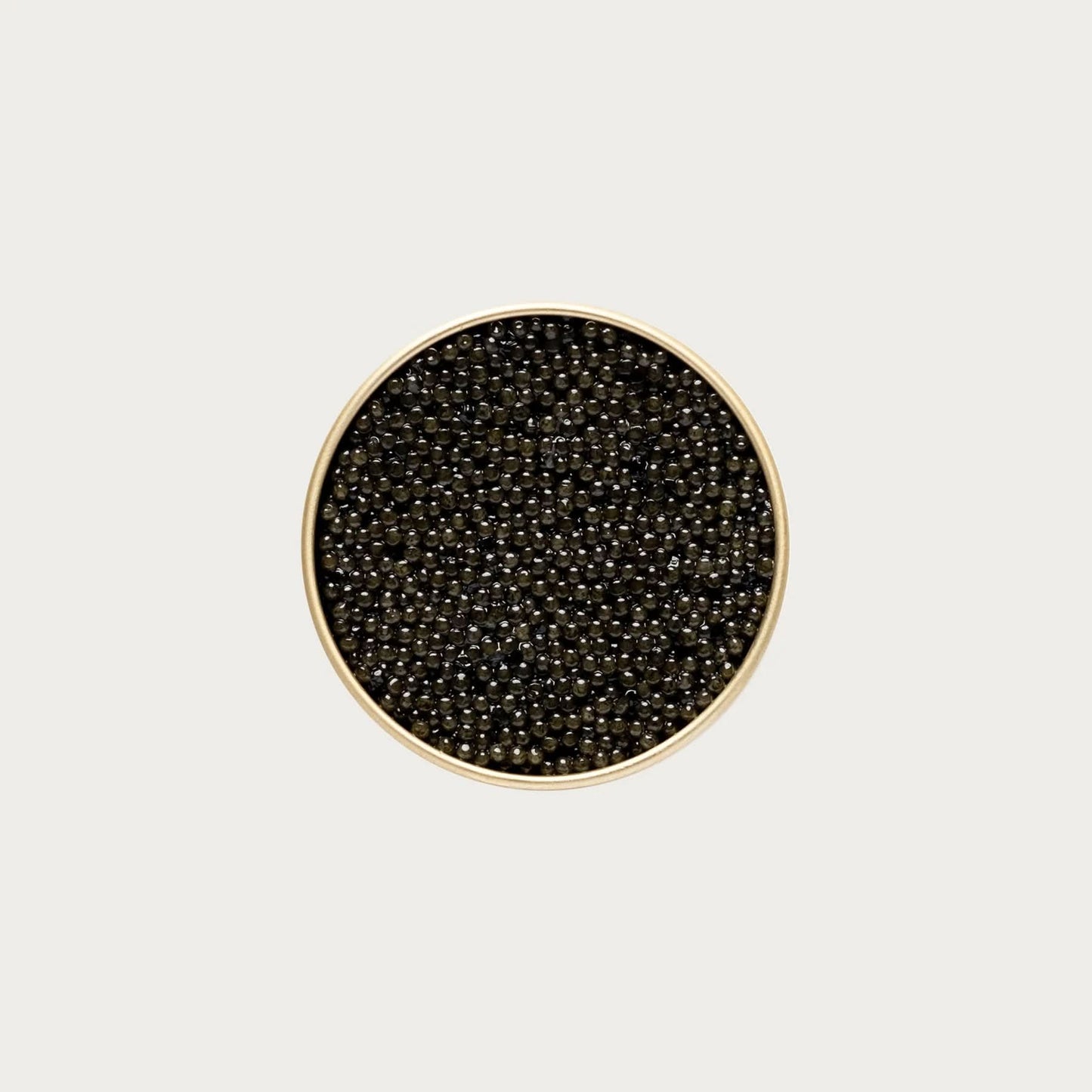
Paddlefish caviar—often called “American caviar”—is the roe from the paddlefish (Polyodon spathula), a freshwater species native to the rivers of the central and southern United States. Here’s what sets it apart:
Flavor
-
Mild and buttery: Less intense than sturgeon caviar.
-
Lightly earthy and slightly sweet: Many compare it to a toned-down version of classic Sevruga sturgeon caviar.
-
Clean finish: Not overly briny; accessible even to beginners.
Texture
-
Small to medium pearls: Typically steel-gray to charcoal in color.
-
Delicate but not mushy: Eggs have a gentle pop, though softer than higher-end sturgeon varieties.
Appearance
-
Gray to silver-black hue
-
Subtle sheen, uniform grains
Culinary use
-
Served traditionally on blinis with crème fraîche, but also:
-
On oysters or scallops
-
With soft scrambled eggs
-
As a finishing garnish for potatoes or pasta
-
Price & availability
-
More affordable than sturgeon caviar, making it popular for chefs and home enthusiasts who want the caviar experience without premium sturgeon pricing.
-
Sustainably harvested from aquaculture and wild fisheries (regulated).
Overall
Paddlefish caviar is valued for its approachable flavor, fine texture, and excellent value, offering a high-quality caviar experience that’s elegant without being overwhelming or overly costly.
Country of Origin:
American Paddlefish Caviar -USA